.svg)


7 Best Hubflo Alternatives in 2026 (Tested for Customer Onboarding)
We tested 7 alternatives to Hubflo's simple portal, from AI-built workflows to full enterprise platforms.
Hubflo is, underneath the branding, a client portal and not much more. It covers the basics well: customers log in, see their tasks, upload files. Everything past that stays thin. Workflow automation is limited and often needs manual triggers instead of running on its own, building a template takes real manual effort, and keeping templates consistent gets harder as you add customer types. There's no AI to help build or maintain any of it, and no MCP connector to extend it either, so workflow creation and automation stay manual work start to finish. Customers need to create an account just to reach their portal, a friction point that shows up consistently in reviews, and CRM integrations run through Zapier workarounds with limited triggers rather than anything native.
We tested seven alternatives against the workflow that actually matters: getting a new customer from signed contract to fully onboarded with the least chasing, using a tool with room to grow past the portal itself.
At a glance
| Tool | Best for | Starting price | Free trial | Standout |
|---|---|---|---|---|
| LaunchBay | Teams that want onboarding automated, not just tracked | From $29/mo (no seat minimum) | Yes | Customizable portals backed by deep workflow automation |
| Assembly | Simple portals extendable with custom apps | $49/mo (no seat minimum) | Yes | Basic hub to create custom connections with other apps |
| SuiteDash | Freelancers/solopreneurs wanting many tools in one subscription | Starts at $19/mo (basic features) | Yes | CRM, invoicing, and portal bundled into one subscription |
| Rocketlane | Enterprise PSAs (Professional Services) | $245/month (min 5 seats required) | Yes | Deep reporting and resource allocation tools |
| Moxo | Regulated, high-touch enterprise (finance, legal, healthcare) | ~$450/mo (custom quoted) | No | SOC 2 Type II + GDPR compliance, SSO/SAML, and a branded mobile app for regulated industries |
| GuideCX | Milestone-heavy onboarding | $572/mo (4-seat minimum required) | Demo Only | In-depth project plans with per-project customization |
| OnRamp | Enterprise customer success teams needing deep customization | From $15,000/year (custom pricing) | Demo Only | Highly customizable, conditional-logic workflows |
Prices are monthly, billed monthly, as of September 2026, except for OnRamp and Moxo, which don't publish pricing publicly (starting figures are reported by users).
LaunchBay
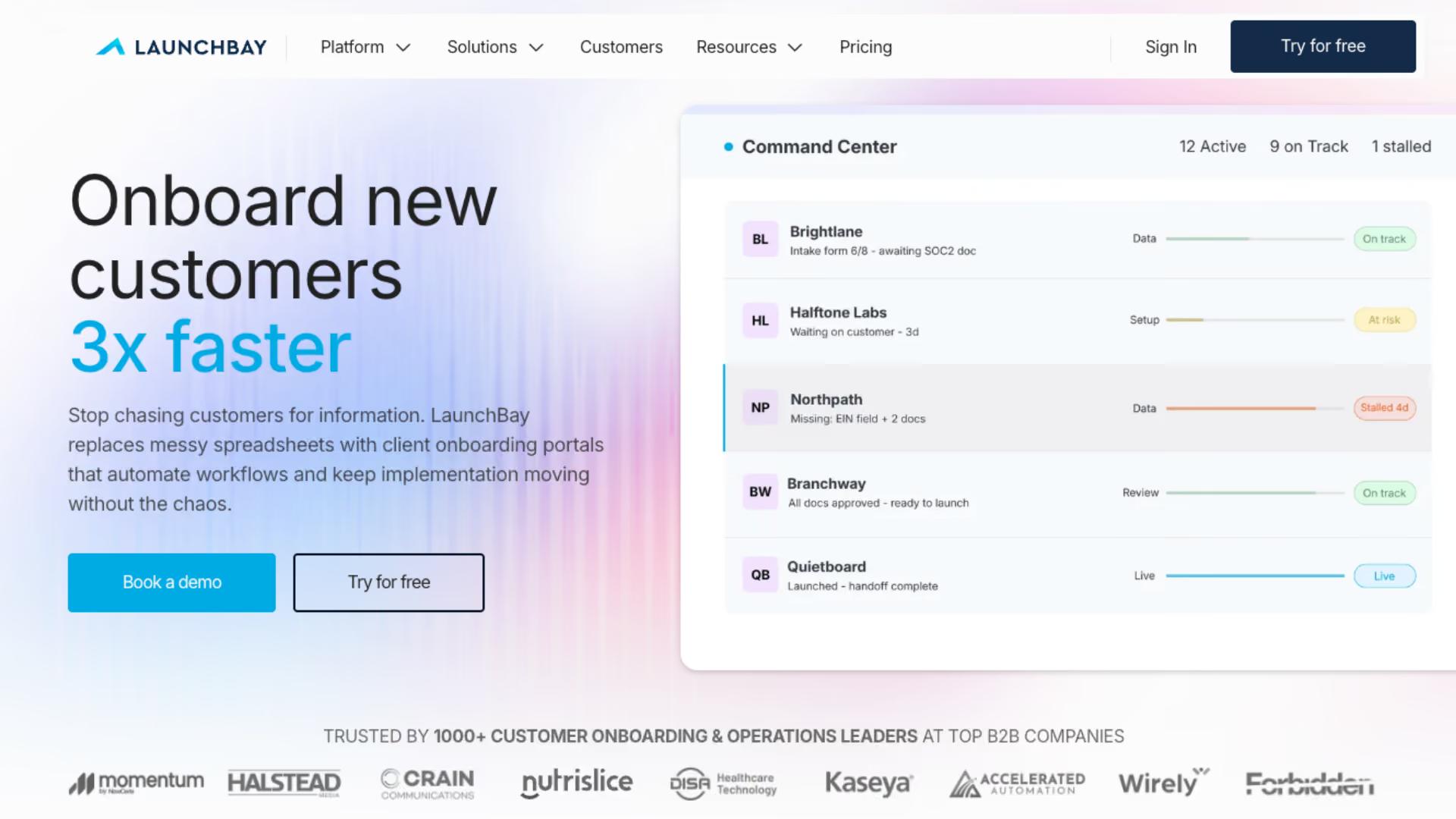
Hubflo covers the portal and not much else: workflow automation is limited and often needs manual triggers, templates take real manual effort to build and get harder to manage as you add customer types, and there's no AI or MCP to help with any of it. LaunchBay's AI turns a description of your process into a full onboarding playbook, tasks, forms, contracts, and automations included, and most teams are live in under an hour, no professional services required. Every customer gets a branded, loginless portal instead of an account and password wall, and closing a deal in your CRM can kick off onboarding automatically instead of routing through a Zapier workaround.
- Deep, customizable workflow automation, not just a portal to log into
- Branded, loginless customer portal, no account or password wall
- Native CRM integrations that kick off onboarding automatically, not just Zapier workarounds
- Not built for one-off freelance gigs or solopreneurs
- May lack the resourcing and utilization reporting enterprise-level teams need
LaunchBay pairs a customizable, branded portal with the deep workflow automation Hubflo doesn't attempt, replacing account gates and manual template building with native CRM automation from day one.

See why LaunchBay is the best Hubflo alternative →

Assembly
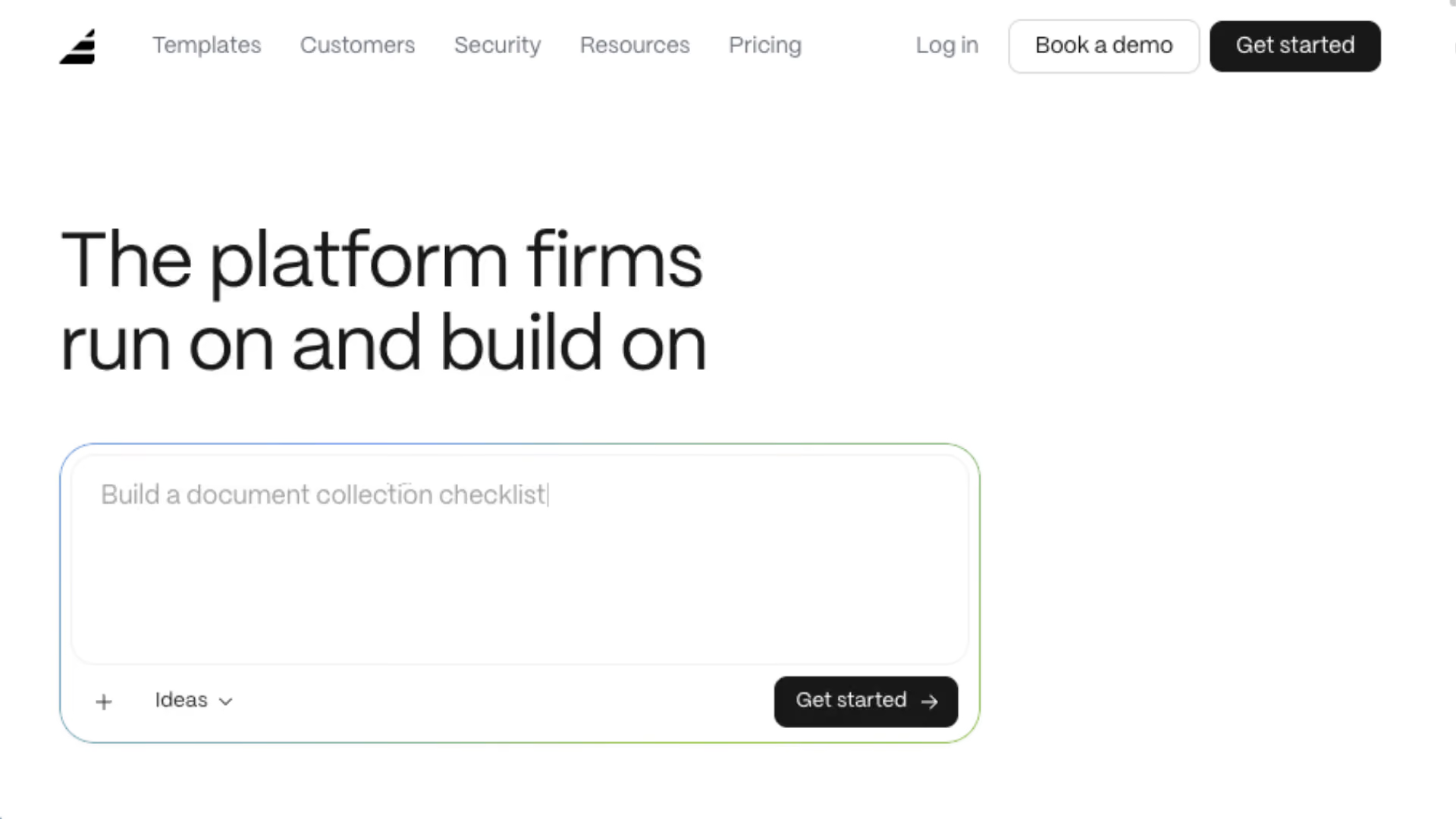
Assembly is Hubflo's closest analog: both are fast, simple customer portals built for agencies that don't want to configure much. Assembly lets you build and connect custom applications when you outgrow the defaults, Hubflo doesn't offer that path at all, what you see out of the box is what you get. Assembly's own ceiling is real too: anything beyond simple workflows still means building a custom app yourself, and its MCP is a generic pass-through to Assembly's existing API rather than onboarding-built tools.
- Can be extended with custom-built applications when you outgrow the defaults, unlike Hubflo
- Quick to set up if you're an agency that needs a simple customer portal
- Automated workflows that are simple to set up for teams without advanced needs
- Creating anything other than simple workflows requires custom applications
- Limited reporting and portal customizations
- MCP is a generic API pass-through, not built for onboarding workflows
Assembly and Hubflo start from the same place, a simple agency portal, but Assembly gives you a path to extend it with custom applications that Hubflo simply doesn't offer.
Head-to-head: LaunchBay vs. Assembly →
SuiteDash
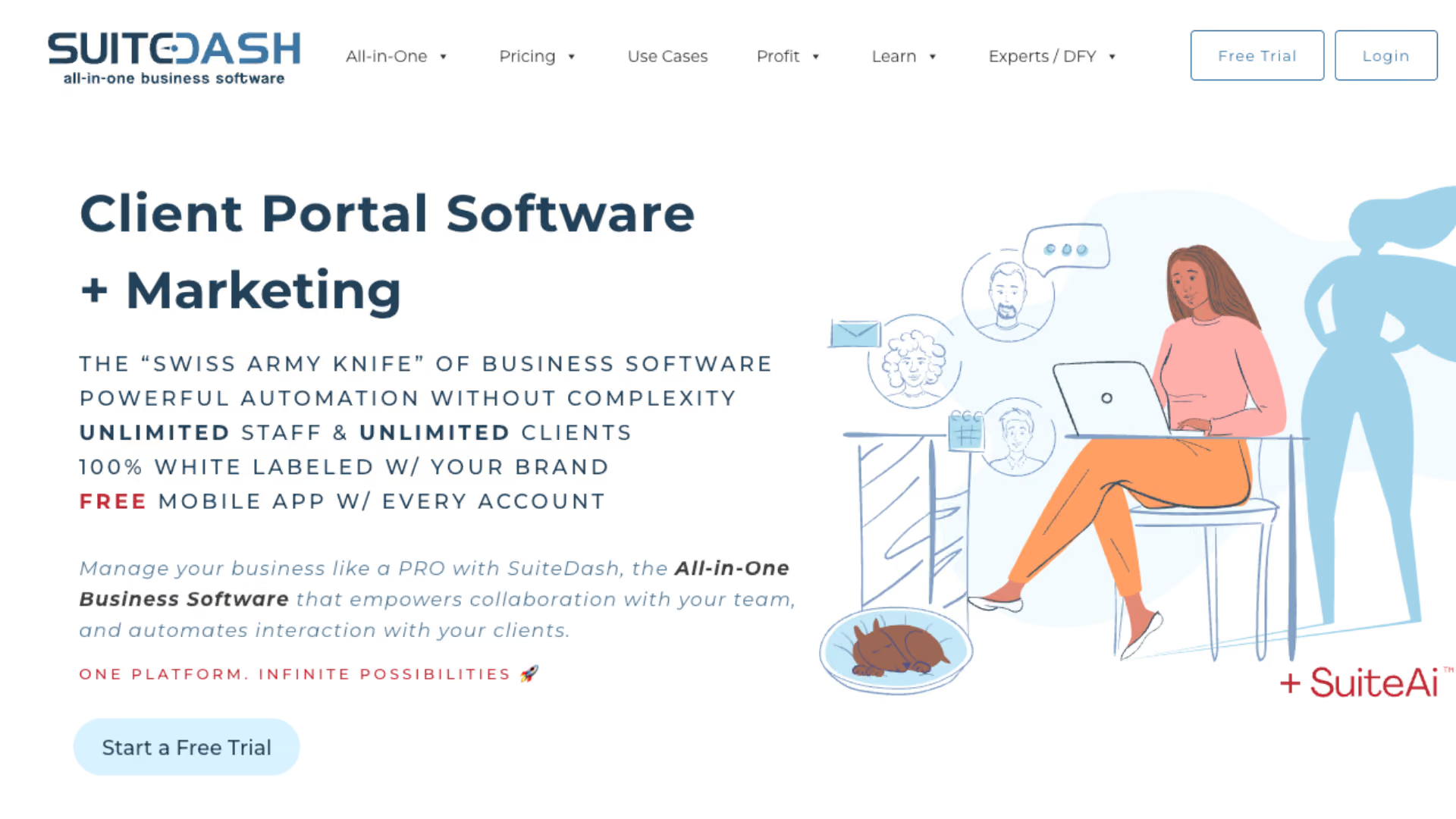
SuiteDash takes the opposite approach from Hubflo: instead of doing one thing, the portal, well, it bundles CRM, invoicing, scheduling, and email marketing in alongside it. If you're consolidating tools as a solo operator, that breadth is the appeal. The tradeoff is depth and polish: SuiteDash's interface shows its age, and reviewers describe a steeper learning curve than a single-purpose portal like Hubflo, even though you end up with more tools in the box.
- All-in-one subscription covering CRM, invoicing, scheduling, and portals, more than Hubflo's single-purpose portal
- Lifetime-payment pricing option appeals to budget-conscious agencies
- Broad feature set means fewer separate tools to pay for
- No loginless customer access, customers need a password to log in, same friction point as Hubflo
- Configuration complexity, it's a build-it-yourself toolkit, not turnkey
- Dated interface compared to purpose-built portals like Hubflo
SuiteDash trades Hubflo's single-purpose simplicity for broader tooling, CRM, invoicing, and scheduling all bundled in. That breadth comes with a steeper setup and a less polished interface.
Head-to-head: LaunchBay vs. SuiteDash →
Rocketlane
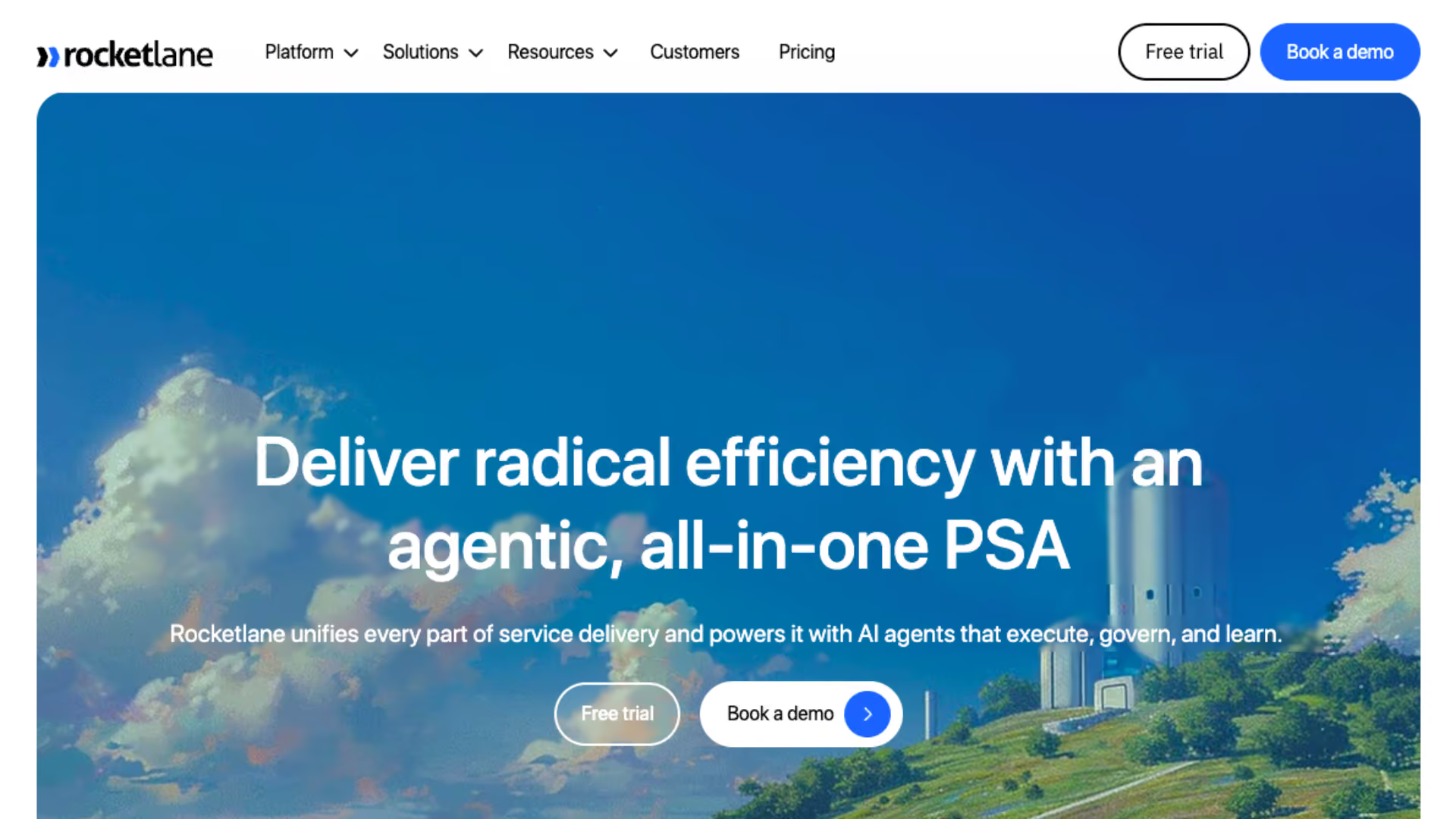
Rocketlane sits at the opposite end of the spectrum from Hubflo: a full PSA platform built for enterprise-level implementation, running billable, multi-team engagements with other enterprise customers, not a simple client portal. If you've outgrown Hubflo's portal-only approach and need real resourcing, budgets, and multi-team workflow depth, Rocketlane has it. Setup is where you pay for it, though: weeks-long configuration, dedicated training, and reporting you'll need to customize just to make it workable, a heavy lift compared to Hubflo's afternoon setup.
- Deep PSA: resourcing, budgets, utilization Hubflo doesn't attempt
- Strong for complex, multi-team rollouts
- Detailed, customizable reporting
- Highly configurable workflows
- Weeks-long setup with a steep learning curve, a different league from Hubflo's afternoon setup
- Resourcing and utilization tools are built for enterprise, not small agencies
- Customer portals lack key customization
Rocketlane is everything Hubflo isn't: deep PSA functionality for enterprise, multi-team implementation. That depth comes with weeks of setup instead of Hubflo's afternoon, and it's overkill if a simple portal was all you needed.
Head-to-head: LaunchBay vs. Rocketlane →
Moxo
.avif)
Moxo doesn't build out-of-the-box portals for any one motion, sales, onboarding, or otherwise. Instead it offers a fully bespoke portal that connects with workflows customized to whatever process you run, a world away from Hubflo's fixed, ready-made template. That flexibility comes at a real cost: setup is complex and time-intensive, with hands-on onboarding from Moxo's own team, since nothing is pre-built the way Hubflo's portal is. It's built for regulated, high-touch industries where compliance takes priority over ease of use for customers and teams.
- Fully bespoke portals and workflows customized to any process, not a fixed template like Hubflo's
- Role-based access, SSO/SAML, audit trails, and a branded native mobile app
- Powerful workflow builder supports multi-party, conditional-logic processes
- Setup is complex and time-intensive, nothing is pre-built the way Hubflo's portal is
- Chat lives inside individual workspaces, no unified inbox across customers
- Pricing isn't public; users report custom-quoted plans starting around $450/month
Moxo trades Hubflo's fixed, ready-made template for total customization, at the cost of a setup that takes real time and hands-on work instead of an afternoon.
Head-to-head: LaunchBay vs. Moxo →
GuideCX
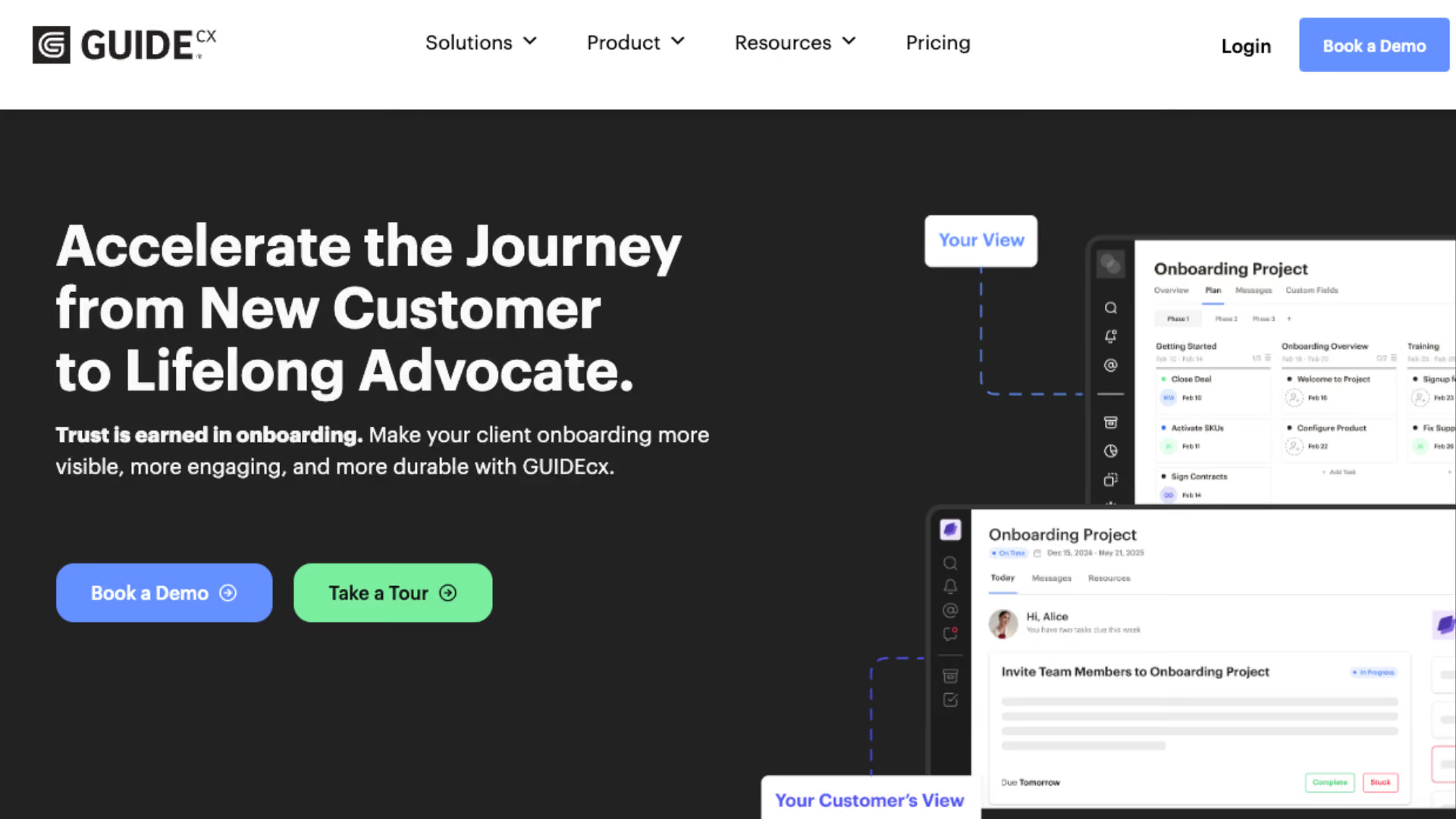
GuideCX is built for a completely different team than Hubflo's typical customer: mid-market and enterprise implementation orgs that need deep reporting and forecasting, not small agencies that want a simple portal. You pay for that depth in dependency, though: full implementation almost always needs GuideCX's own team, and any change to your process after go-live means going through that same lift again, a sharp contrast to editing a Hubflo template yourself. The customer-facing portal is also thinner than you'd expect for the price: limited customization, with real limits on what customers can see and do inside it.
- Excellent customer-facing project visibility for structured, milestone-heavy implementations
- Strong milestone and dependency structure
- Good CRM integrations
- Full setup and most changes need GuideCX's own team, unlike Hubflo's self-serve simplicity
- Customer portal is limited and thinner than the price suggests
- Lacks a connected MCP server, "MCP-ready" API requires custom development
GuideCX serves a much larger, more complex team than Hubflo does, with deep reporting to match. Getting there and staying there both require GuideCX's own team, a different tradeoff entirely from Hubflo's simple, self-serve portal.
Head-to-head: LaunchBay vs. GuideCX →
OnRamp
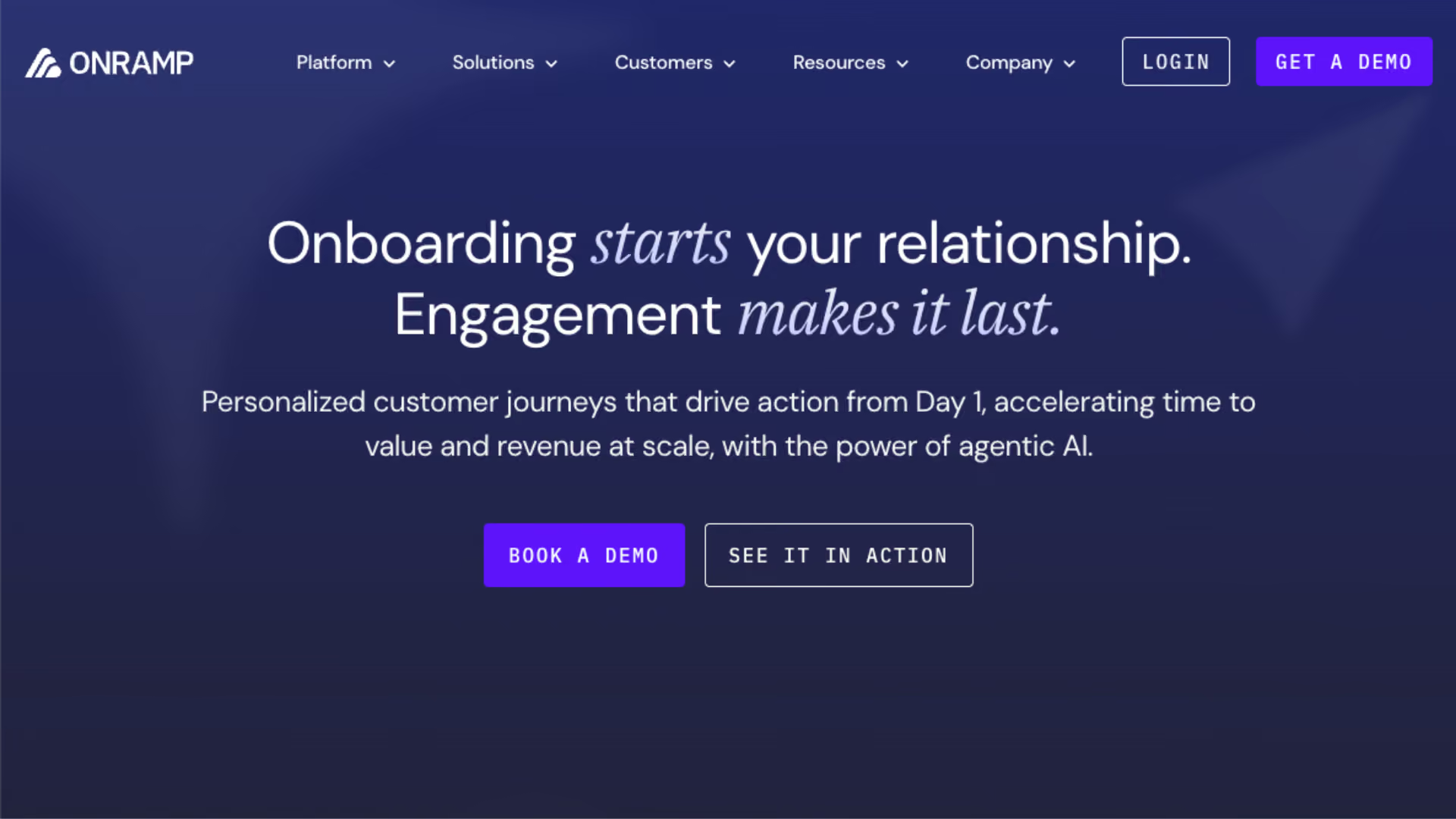
OnRamp shares GuideCX's basic tradeoff: built for enterprise customer success teams, with setup and most changes needing OnRamp's team involved, a heavier model than Hubflo's self-serve template editing. Where OnRamp pulls ahead of GuideCX is the customer-facing side, a more customizable portal and workflows reviewers call easier to work with, though still nowhere near Hubflo's simplicity to set up. There's no loginless access either, customers need a password or six-digit code every time.
- Highly customizable for the unique needs of enterprise customer success teams
- Dual view: bespoke customer portal plus internal project management
- In-depth, dynamic workflows with support for conditional logic
- No loginless portal access, customers need a password or six-digit code every time
- Setup and most changes still require OnRamp's team, a heavier model than Hubflo's
- Internal task management tools have a steep learning curve
OnRamp brings enterprise-grade customization that Hubflo doesn't attempt, but setup and ongoing changes both lean on OnRamp's own team, a different level of commitment than editing a Hubflo template yourself.
Head-to-head: LaunchBay vs. OnRamp →
Which Hubflo alternative should you pick?
- You need real workflow depth and automation, not just a portal to log into: LaunchBay. AI builds the playbook, and it's live in under an hour.
- You just need a simple, branded portal: Assembly if you want room to extend it with custom apps later, or SuiteDash if you want CRM and invoicing bundled in too.
- You're a solo operator replacing your whole stack: SuiteDash.
- You're an enterprise customer success team that needs deep customization: OnRamp.
- You're in a regulated, high-touch industry that needs deep compliance and audit trails: Moxo.
- You've outgrown a simple portal and need real PSA depth, resourcing, budgets, multi-team rollouts: Rocketlane.
- You need milestone-heavy, enterprise-grade project visibility: GuideCX, though expect their team to handle setup and most changes.
- Not sure you need software at all?If you're under about 10 active customers with one owner, a good spreadsheet might genuinely be enough.
See why Hubflo customers switch to LaunchBay
Feature-by-feature comparison, migration path, and what changes for your customers on day one.
Frequently asked questions
The most common themes in verified reviews: getting the basic portal live is easy, but building real reusable workflows takes significant manual effort, and automations that do exist often need manual triggers instead of running on their own. Customers need to create an account just to reach their portal, and pricing scales quickly and unpredictably as you add customers and team members.
Assembly is comparably fast for a simple branded portal. LaunchBay is the fastest option if you want real workflow depth from day one: its AI builder turns a description of your process into a working playbook, tasks, forms, contracts, and reminders included, in under an hour, no manual template building required.
LaunchBay starts at $29 a month with no seat minimum, and SuiteDash starts at $19 a month. Both publish flat pricing upfront, compared to Hubflo's costs, which climb as you add customers and team members.
Most tools on this list run on paid plans with free trials rather than free-forever tiers. If your onboarding volume is light enough that free is the priority, a well-built spreadsheet may serve you better than a hobbled free plan.
LaunchBay is the one built around onboarding as the core job, with deep, customizable workflow automation Hubflo doesn't attempt. If you need real enterprise depth beyond a portal, GuideCX and Rocketlane both go further, at the cost of a much heavier setup.