.svg)


7 Best GuideCX Alternatives in 2026 (Tested for Customer Onboarding)
We tested 7 alternatives to GuideCX's enterprise-grade reporting, from self-serve tools to deeper PSA platforms.
.avif)
GuideCX does a lot for enterprise teams. Its reporting and forecasting run deep, and for organizations of 100 or more people that need visibility built around their exact process, that level of customization is genuinely valuable. The catch is what it takes to get there and keep it running: full implementation almost always requires direct support from GuideCX's own team, dedicated training before individual users are comfortable, and any change to your process after go-live means going through that same heavy lift again. Plus, even after a successful rollout, a common thread shows up in conversations with former GuideCX customers: teams are reluctant to actually use it day to day, and often quietly fall back on spreadsheets.
We tested seven alternatives against the workflow that actually matters: getting a new customer from signed contract to fully onboarded with the least chasing, in a tool your team can start using within days of signing up and keep iterating on over time.
At a glance
| Tool | Best for | Starting price | Free trial | Standout |
|---|---|---|---|---|
| LaunchBay | Teams that want onboarding automated, not just tracked | From $29/mo (no seat minimum) | Yes | Launch repeatable onboarding playbooks and customer portals the same day as signing up |
| Rocketlane | Enterprise PSAs (Professional Services) | $245/month (includes 5 seats) | Yes | Deep reporting and resource allocation tools |
| OnRamp | Enterprise customer success teams needing deep customization | From $15,000/year (custom pricing) | Demo Only | Highly customizable, conditional-logic workflows |
| Dock | Revenue teams bridging sales into onboarding | From $350/mo (includes 5 seats) | Yes | MCP included free on every plan, even the free tier |
| Assembly | Budget portals for agencies building custom workflows | $49/mo (no seat minimum) | Yes | Basic hub to create custom connections with other apps |
| Arrows | HubSpot-native teams running mutual action plans | No public pricing (scales with team size) | Demo Only | Onboarding plans and portals live inside HubSpot deals and tickets |
| Moxo | Regulated, high-touch enterprise (finance, legal, healthcare) | ~$450/mo (custom quoted) | No | Fully bespoke mobile application for customer portals |
Prices are monthly, billed monthly, as of September 2026, except for OnRamp, Moxo, and Arrows, which don't publish pricing publicly (starting figures are reported by users).
LaunchBay
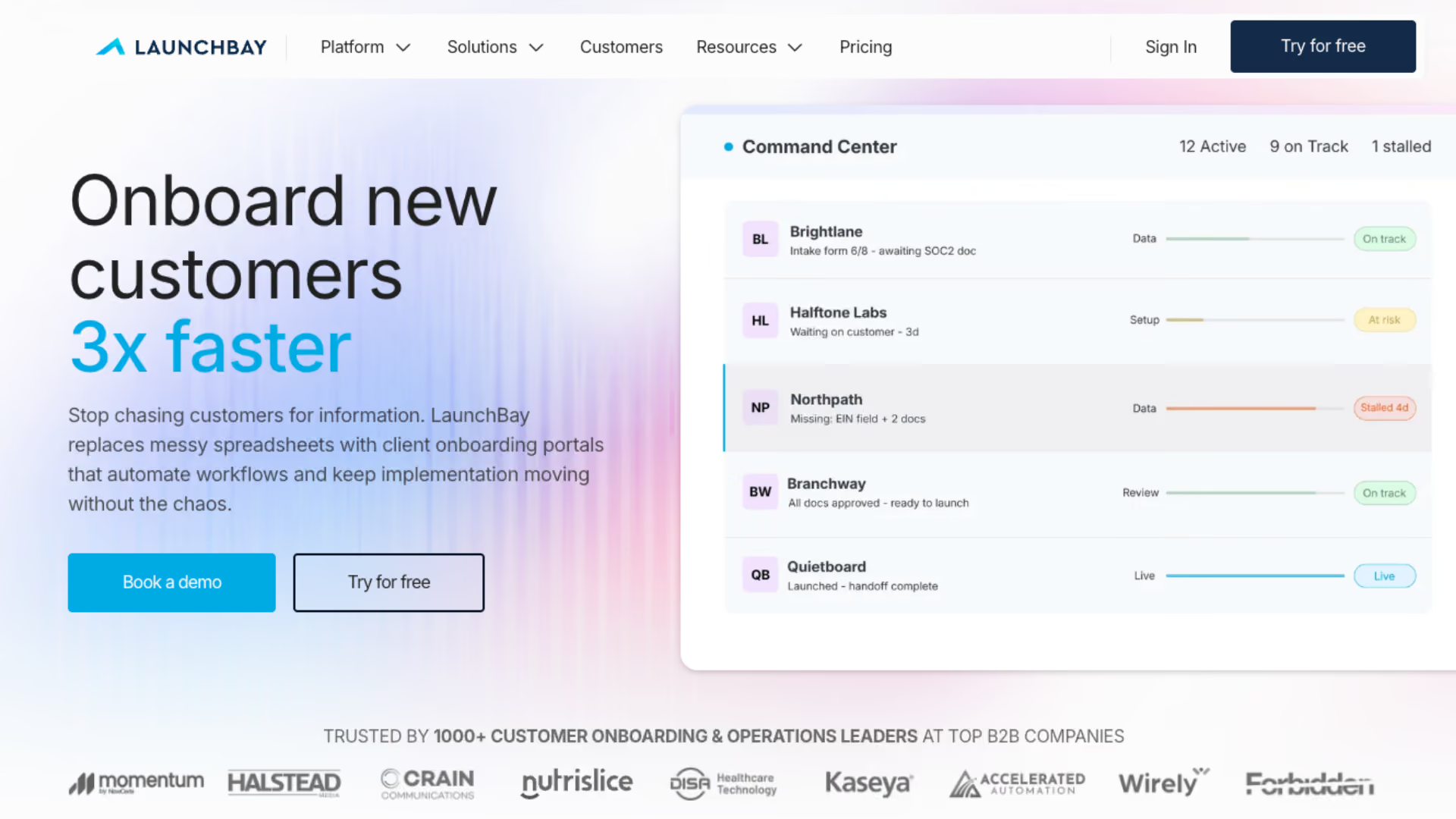
GuideCX is built for enterprise teams with a support contract to lean on: every setup change and every new process needs their team's help to implement. LaunchBay is built for teams that need to move now, under 100 people, where your own team makes the change themselves, no consulting call, no fear of breaking something that took weeks to configure. Reporting works the moment you turn it on, no dashboard or metrics setup required, and every customer gets a branded, loginless portal with built-in signing, proofing, and live chat that GuideCX's portal doesn't match.
- Your team makes setup changes and launches new processes directly, no consulting call required
- Reporting and visibility work out of the box, no dashboard or metrics setup needed
- Branded, loginless customer portal with native signing, proofing, and live chat built in
- May lack GuideCX's depth on advanced forecasting and modeling for very large, complex enterprises
- Not built for one-off freelance gigs or solopreneurs
LaunchBay skips GuideCX's consulting-dependent setup: your team makes changes directly, reporting works out of the box, and customers get native signing, proofing, and chat instead of a bare-bones portal. The tradeoff is GuideCX's edge in advanced forecasting and modeling for very large enterprises.

See why LaunchBay is the best GuideCX alternative →

Rocketlane
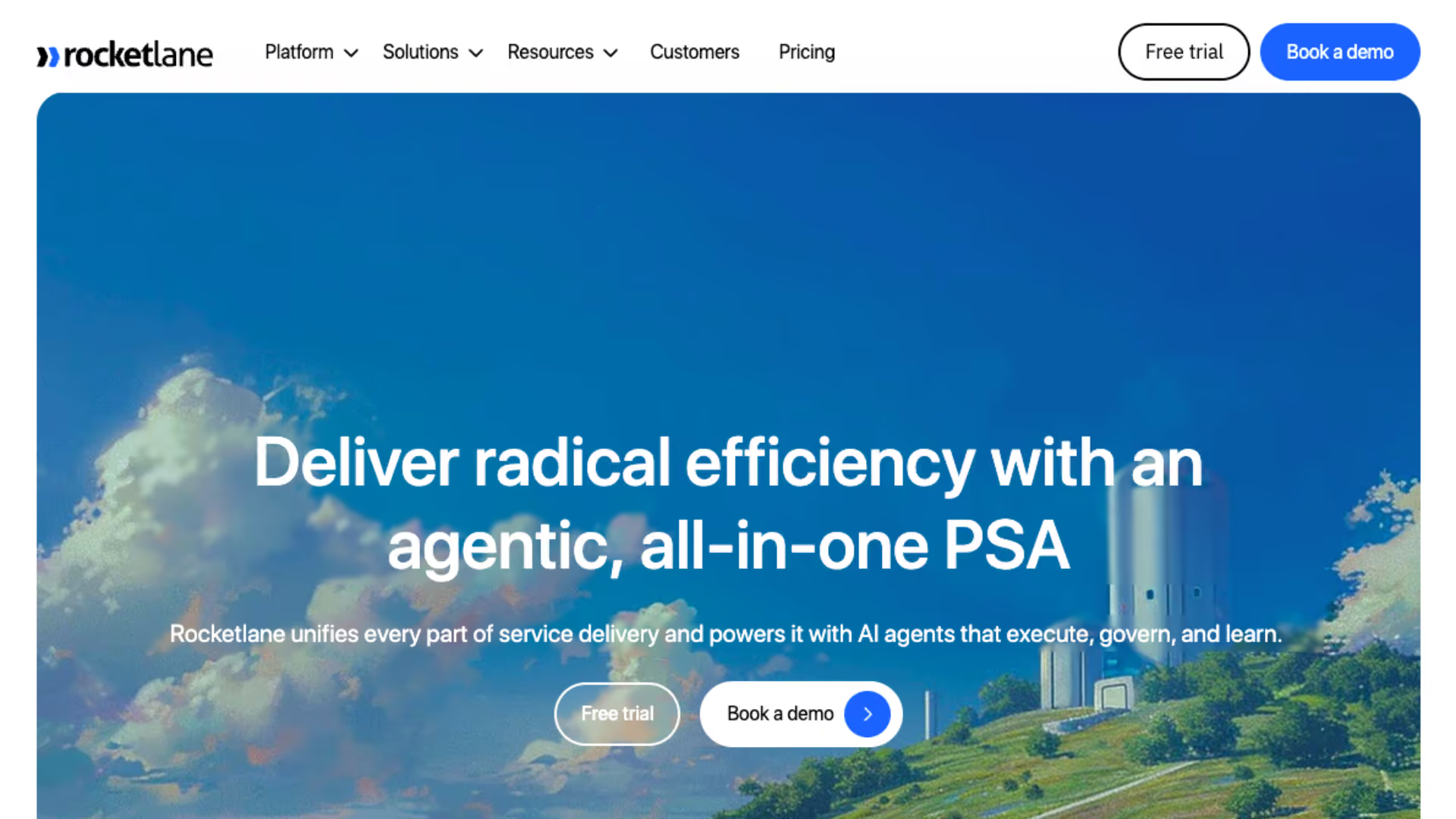
Rocketlane is the closest alternative to GuideCX for teams that still want deep, enterprise-grade tracking and reporting, just with less setup pain. It's still a full PSA platform built for enterprise-level implementation, running billable, multi-team engagements with other enterprise customers, and setup still takes real time. But out-of-the-box tracking, reporting, and visibility come together faster than GuideCX's, without needing GuideCX's level of hands-on configuration to get there.
- Less setup complexity than GuideCX, with stronger out-of-the-box reporting and visibility
- Deep PSA: resourcing, budgets, utilization
- Detailed, customizable reporting
- Still a heavier setup than LaunchBay, with a steep learning curve for small teams
- Resourcing and utilization tools are built for enterprise, not growing teams
- Customer portals lack key customization
Rocketlane is the natural step down from GuideCX: still enterprise-grade PSA depth, but faster to get real tracking and reporting live, with less setup pain. It's still a heavier lift than LaunchBay, and customer portals don't offer much room to customize.
Head-to-head: LaunchBay vs. Rocketlane →
OnRamp
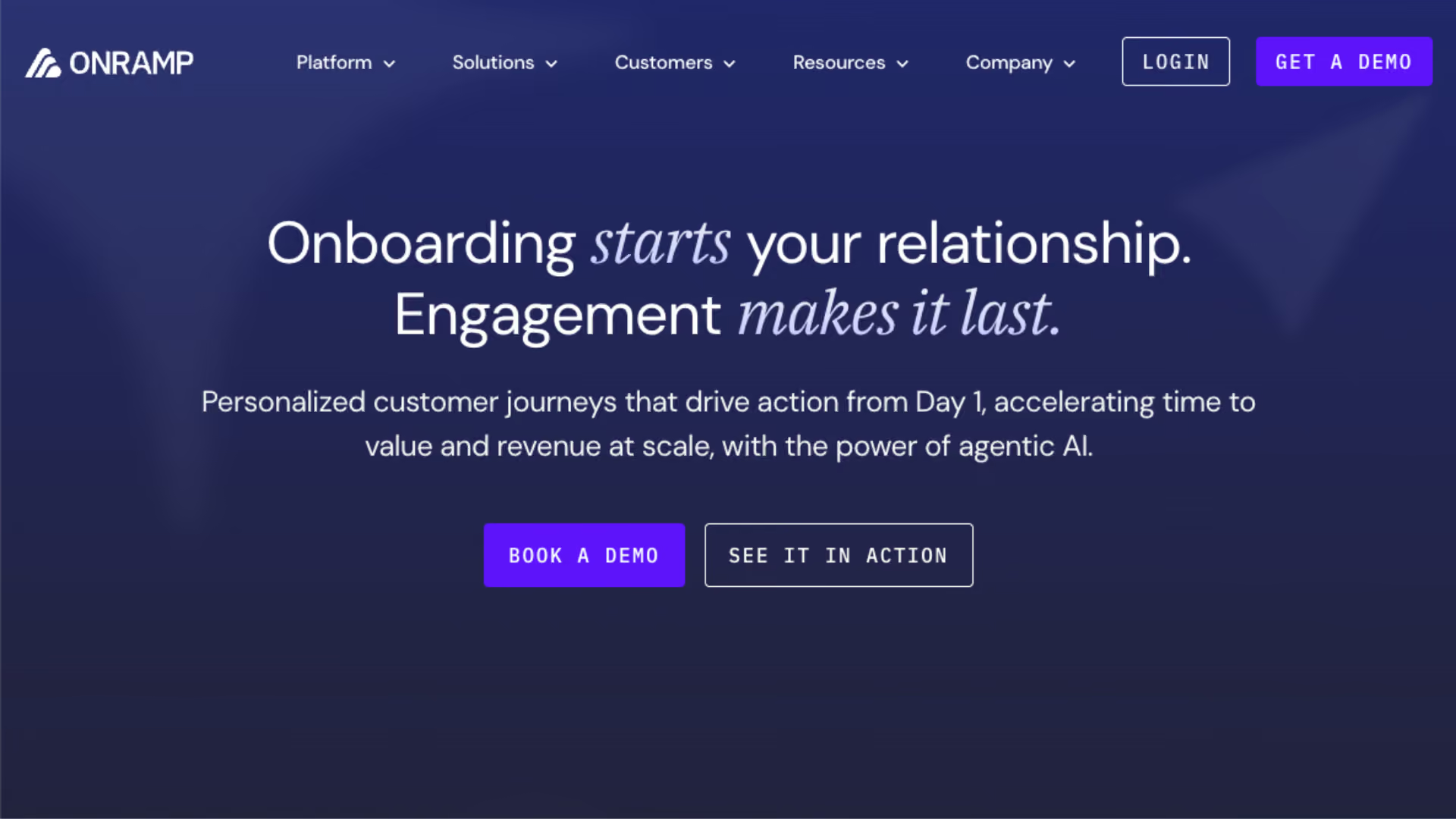
OnRamp shares GuideCX's core tradeoff: built for enterprise customer success teams, and both setup and most changes need OnRamp's team involved. Where it pulls ahead of GuideCX is the customer-facing side: OnRamp's portal is more customizable, and reviewers consistently describe its workflows as easier to work with day to day. That flexibility still comes wrapped in complex, lengthy setup, internal tools with a steep learning curve, and no loginless access, customers need a password or six-digit code every time.
- More customizable customer portal than GuideCX
- Workflows are generally easier to work with day to day than GuideCX's
- Dual view: bespoke customer portal plus internal project management
- Setup and most changes still require OnRamp's team, similar to GuideCX
- No loginless portal access, customers need a password or six-digit code every time
- Internal task management tools have a steep learning curve
OnRamp shares GuideCX's enterprise-heavy setup model, needing their team for most changes, but pulls ahead with a more customizable portal and workflows reviewers call easier to work with.
Head-to-head: LaunchBay vs. OnRamp →
Dock
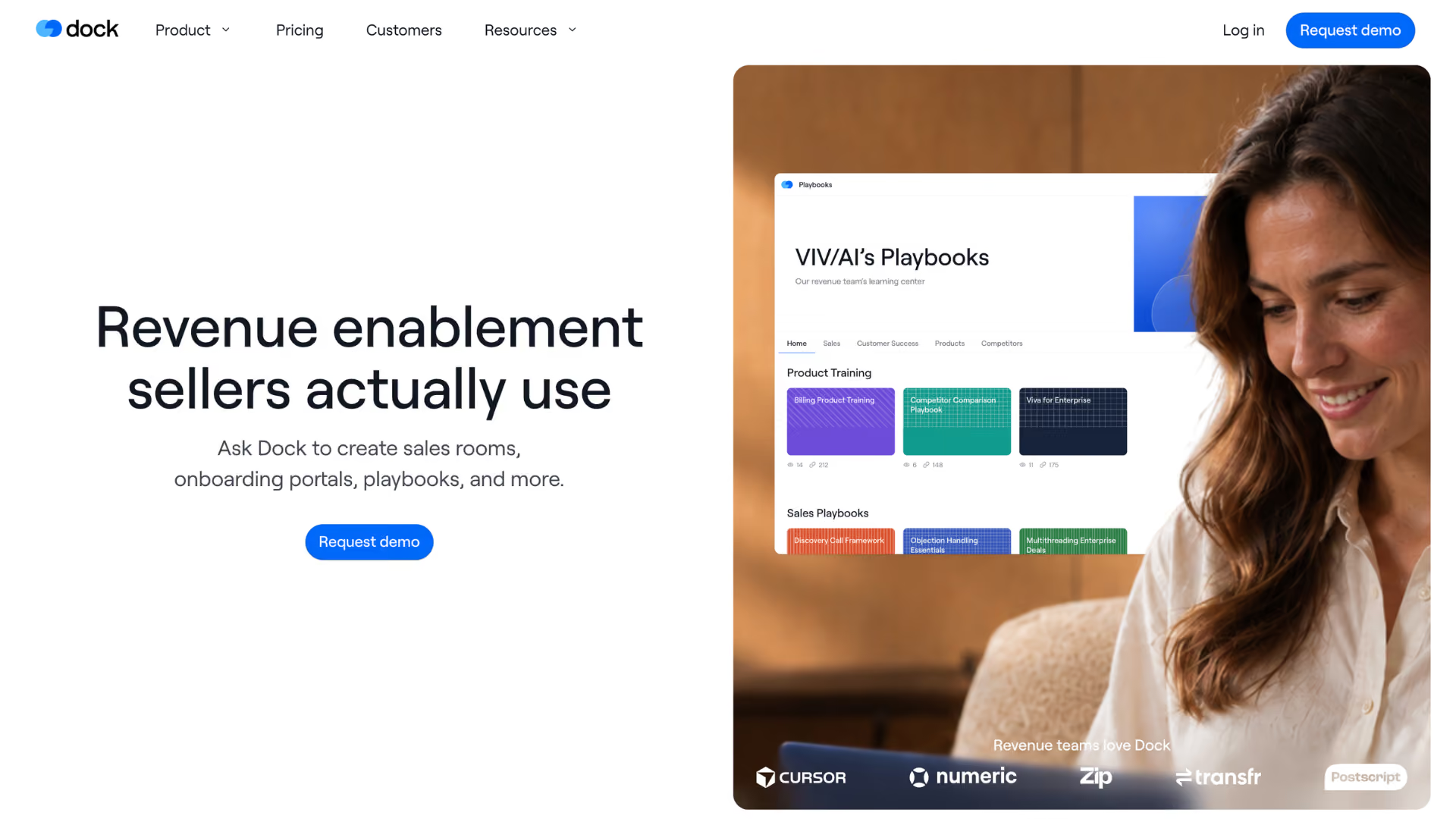
Dock is sales-first: digital deal rooms and mutual action plans that can flow directly into onboarding once a deal closes. Setup is reported as fairly easy, faster than GuideCX or Rocketlane. You feel that sales-first focus on the customer side, though: customer tasks and what customers can actually do inside their portal stay thinner than onboarding-native tools, no native e-signature, design proofing, time tracking, or centralized inbox, and customers need an account with a six-digit code instead of a magic link.
- Easy, fairly fast setup compared to GuideCX or Rocketlane
- Free tier includes MCP access on every plan, no price gating
- Deal-room model gives sales one branded link instead of email attachments
- Client tasks and portal capabilities stay thin, since the product is built sales-first
- No native e-signature, design proofing, or time tracking, teams add outside tools
- No loginless access, customers need an account and a six-digit code
Dock's sales-first deal rooms flow into onboarding with an easy, fast setup, but customer tasks and portal capability stay thinner than onboarding-native tools since the product's core focus is the sales motion, not what happens after.
Head-to-head: LaunchBay vs. Dock →
Assembly
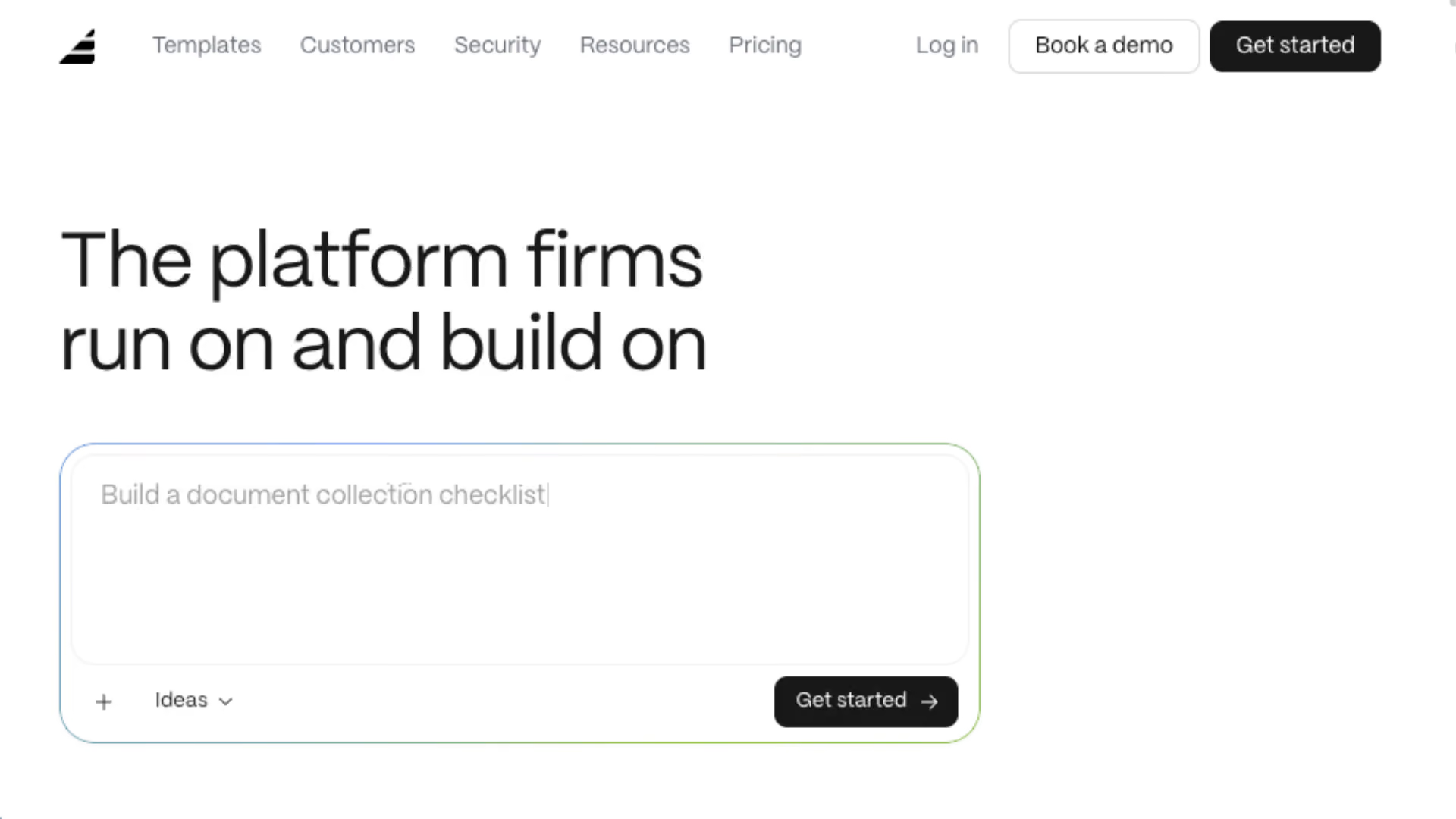
Compared to GuideCX's enterprise setup, Assembly is a much lighter lift: a fast, simple customer portal that agencies can extend by building and connecting custom applications. Its automated workflows are easy to set up as long as your needs stay basic. Anything beyond that means building a custom app yourself, and reporting, portal customization, and its MCP (a generic pass-through to Assembly's existing API rather than onboarding-built tools) all stay limited.
- Quick to set up if you're an agency that needs a simple customer portal
- Highly customizable for teams willing to build and connect custom applications
- Automated workflows that are simple to set up for teams without advanced needs
- Creating anything other than simple workflows requires custom applications
- Limited reporting and portal customizations
- MCP is a generic API pass-through, not built for onboarding workflows
Assembly is a fast, simple customer portal you can extend with custom applications. Reporting and portal customization stay limited, and its MCP is a generic API pass-through rather than purpose-built onboarding tools.
Head-to-head: LaunchBay vs. Assembly →
Arrows
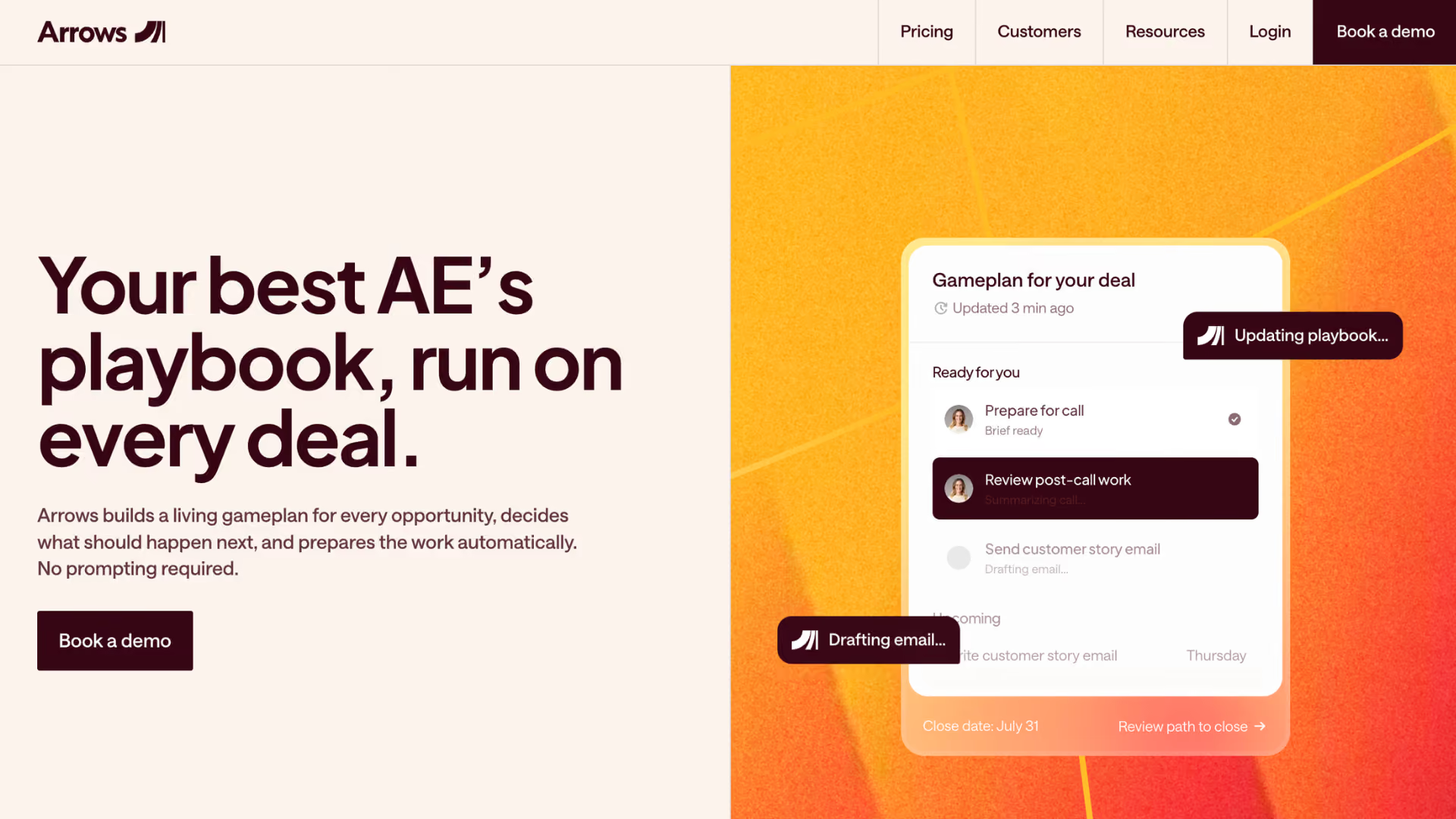
Arrows has leaned further into sales enablement, branding itself around AE playbooks and deal rooms more than customer onboarding specifically. If your post-sales process is genuinely simple, minimal file collection, approvals, forms, tasks, or progress tracking once a deal closes, that may not matter much. For most onboarding and implementation teams, it does: the same HubSpot-only architecture applies, onboarding locks to a single CRM, and you configure HubSpot first and rebuild inside Arrows second, and there's no built-in dashboard to see what's on track without custom HubSpot reports.
- HubSpot-native: onboarding plans and portals live inside deals, tickets, or custom objects
- Tasks sync directly to the CRM record for teams already living in HubSpot
- Fine fit if your post-sales process is genuinely lightweight
- HubSpot-only, locks onboarding to a single CRM and forces a rebuild if you switch
- No native MCP connector for its own data, only indirect access via HubSpot's MCP (standard objects only)
Arrows is built for AE playbooks and deal rooms first. Fine if your post-sales process is genuinely light, but not a good fit for onboarding that involves real file collection, approvals, or progress tracking.
Head-to-head: LaunchBay vs. Arrows →
Moxo
.avif)
If you're leaving GuideCX because you need compliance depth more than a mid-market implementation tool, Moxo is worth a look. It doesn't build out-of-the-box portals for any one motion, sales, onboarding, or otherwise. Instead it offers a fully bespoke portal that connects with workflows customized to whatever process you run. That flexibility is real, but it comes at a cost: setup is complex and time-intensive, with hands-on onboarding from Moxo's own team, since nothing is pre-built for your specific use case. It's built for regulated, high-touch industries where security and compliance take priority over ease of use for customers and teams.
- Fully bespoke portals and workflows customized to any process, not pre-built for one motion
- Security and access controls built bespoke to regulated, high-touch industries
- Setup is complex and time-intensive, nothing is pre-built for your specific use case
- Chat lives inside individual workspaces, no unified inbox across customers
Moxo trades speed for total customization: nothing is pre-built, so setup takes real time and hands-on work, but the payoff is a fully bespoke portal and workflow plus deep compliance features for regulated industries.
Head-to-head: LaunchBay vs. Moxo →
Which GuideCX alternative should you pick?
- You're under 100 people and need to move now, not wait on a consulting call: LaunchBay. Setup is simple, and your own team makes changes directly from day one.
- You just need a simple, branded portal: Assembly lets you extend it with custom-built applications.
- You're bridging sales handoff into onboarding: Dock's deal-room model and free MCP-included tier make it a natural extension if you're already running sales rooms there.
- You need GuideCX-level enterprise depth, but want an easier portal and workflows: OnRamp.
- Your post-sales process is genuinely simple and you're already living in HubSpot: Arrows. If you're collecting real files, approvals, or tracking progress after close, look elsewhere.
- You want a fully bespoke portal and workflow custom-built to your process, or need deep compliance features: Moxo, if you have the time to invest in setup.
- You want GuideCX's depth without GuideCX's setup pain: Rocketlane.
- Not sure you need software at all?If you're under about 10 active customers with one owner, a good spreadsheet might genuinely be enough.
See why GuideCX customers switch to LaunchBay
Feature-by-feature comparison, migration path, and what changes for your customers on day one.
Frequently asked questions
The most common themes in verified reviews, echoed in conversations we've had directly with former GuideCX customers: full implementation almost always needs GuideCX's own team, any change to your process after go-live means another round of that same support, and the customer-facing portal lags well behind the internal side, limited customization and real limits on what customers can do. Even after a successful rollout, many teams end up reluctant to use it day to day and quietly fall back on spreadsheets.
Assembly and Dock are both reported as fairly easy to set up. LaunchBay is the fastest option for full onboarding workflows: its AI builder turns a description of your process into a working playbook, tasks, forms, contracts, and reminders included, in under an hour.
LaunchBay starts at $29 a month with no seat minimum, and Assembly starts at $49 a month. Both undercut GuideCX's roughly $572-a-month floor by a wide margin.
Dock offers a genuine free tier (10 workspaces, MCP included), though its focus is sales deal rooms first, so onboarding-specific features like customer tasks and portal capability stay thinner. Most other tools on this list run on paid plans with free trials rather than free-forever tiers.
LaunchBay is built around onboarding as the core job from day one, and fits teams under 100 people that want to move fast. Rocketlane and OnRamp both suit larger orgs that need GuideCX-level depth without GuideCX's full setup burden.